



Understanding USB over IP Technology
USB over IP software works by employing a combination of virtualization and encapsulation. This enables computers without physical USB ports to access USB devices. Data from a USB device is encapsulated so it can be transferred across a TCP/IP network. The information is then de-encapsulated by a virtual USB port implemented by the USB over TCP/IP software. This is what makes the process work over standard internet infrastructure. No specialized network hardware is required, since the USB data travels as regular TCP/IP traffic.
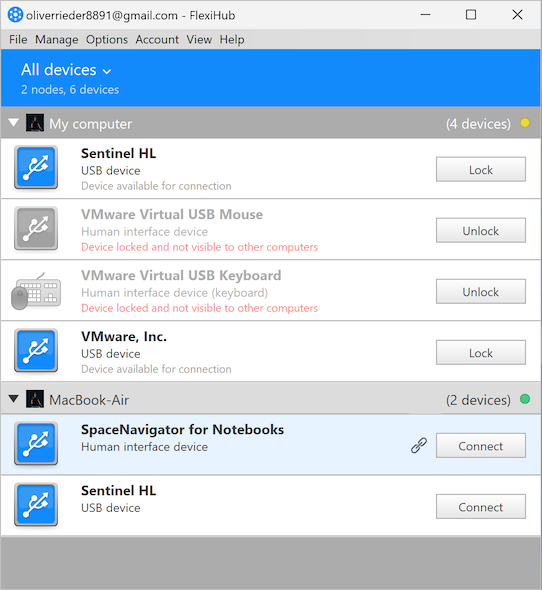
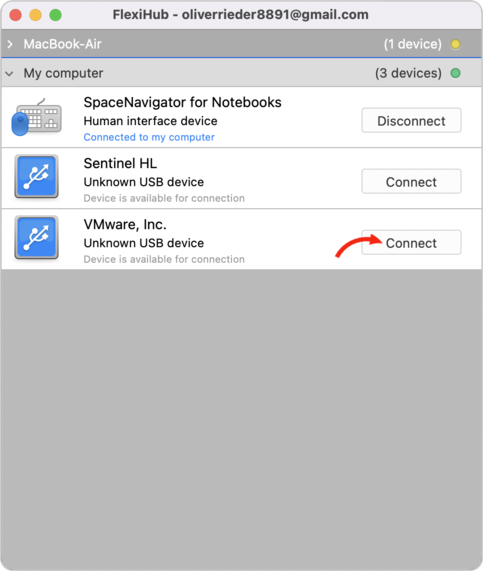
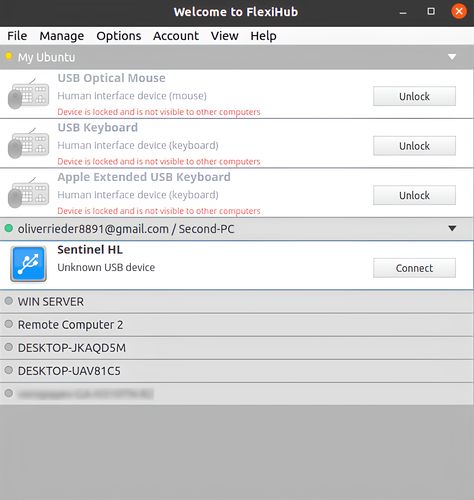
A USB to IP implementation requires the software to be installed on the computer that is physically connected to a USB device that will be shared over the network. The same software is also installed on all remote machines that will access the peripheral over the network.
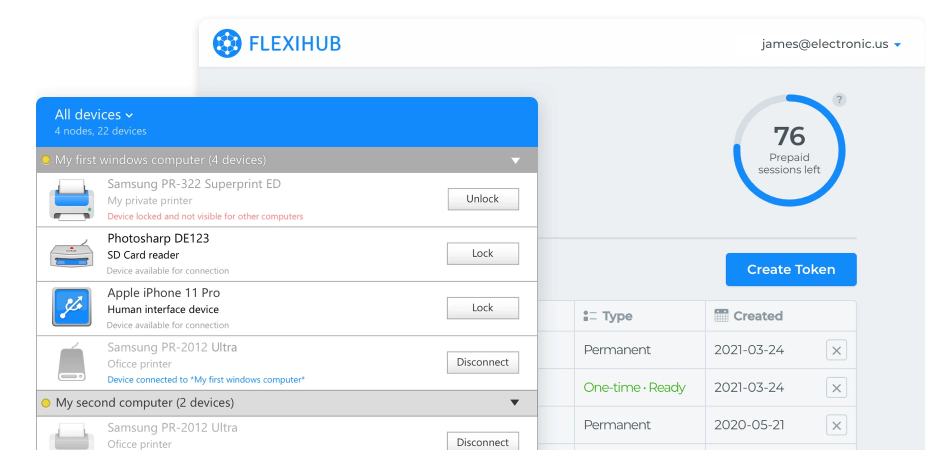
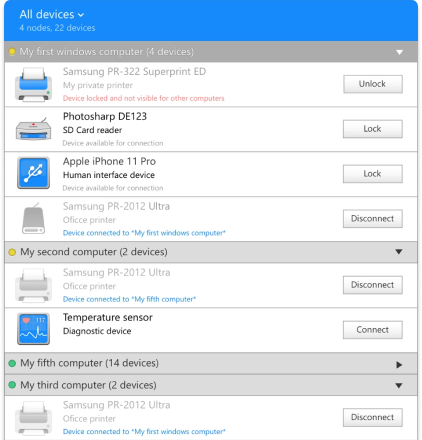
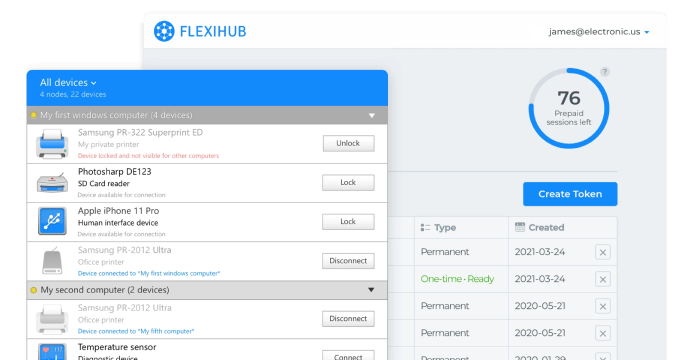
It lets an organization share USB equipment over IP networks without needing device-specific drivers on the host computer, FlexiHub's own virtual USB driver on the remote machine handles the rest automatically. The tool creates secure communication channels through which USB data can be transmitted over the Internet or a private internal network.
Note: Seeing the Technology in Action
To confirm this encapsulation process works as described, we connected an HP LaserJet Pro M404dn printer, a Logitech C920 webcam, and a SanDisk Ultra Flair 64 GB flash drive to a Windows 11 host and accessed all three from a second Windows 11 machine over a Gigabit Ethernet connection, running FlexiHub 7.0.15594. Each device, printing a 10-page PDF, streaming a 1080p feed, and transferring a 1 GB file, connected and performed consistently across three repeated attempts.
To confirm this encapsulation process works as described, we connected an HP LaserJet Pro M404dn printer, a Logitech C920 webcam, and a SanDisk Ultra Flair 64 GB flash drive to a Windows 11 host and accessed all three from a second Windows 11 machine over a Gigabit Ethernet connection, running FlexiHub 7.0.15594. Each device, printing a 10-page PDF, streaming a 1080p feed, and transferring a 1 GB file, connected and performed consistently across three repeated attempts.